

CIF outlook survey signals stable construction activity amid mounting cost pressures
The Irish construction sector remains broadly stable heading into the second quarter of 2026, although rising costs and structural market challenges continue to threaten the pace of housing and infrastructure delivery, according to the latest Construction Industry Federation (CIF) Construction Outlook Survey.
The survey, based on responses from 138 construction companies nationwide, found steady levels of activity across the sector, with modest growth expected over the coming months. Civil Engineering and Specialist Contracting were identified as the strongest performing areas, while activity in other sectors remained more subdued.
Business confidence has improved slightly, with 25% of firms reporting year-on-year growth in turnover during Q1 2026, while 36% expect turnover to increase during Q2. Home Building and Civil Engineering recorded the strongest annual growth, particularly among smaller firms.
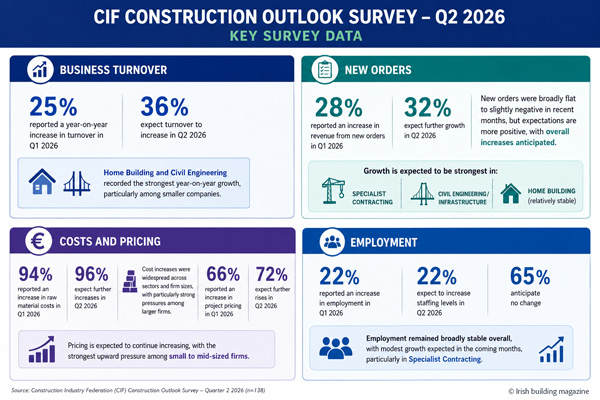 However, the survey highlights continuing pressure on contractors from escalating costs. A significant 94% of firms reported increases in raw material costs during Q1 2026, while 96% expect further increases in Q2. Labour costs also continue to rise sharply, with 74% of companies reporting year-on-year increases and 66% expecting labour costs to rise further in the months ahead.
These pressures are feeding directly into project pricing. Two-thirds of firms reported increased pricing for projects during Q1, with 72% expecting prices to continue rising during Q2 as contractors attempt to absorb ongoing inflationary pressures.
Employment levels remain relatively stable across the sector. While 22% of companies increased staffing levels during Q1, most firms reported no significant change. Similar trends are expected over the next quarter, although Specialist Contracting firms anticipate modest employment growth.
Commenting on the findings, CIF CEO Andrew Brownlee said: “Construction firms remain active and cautiously optimistic, but the reality is that cost pressures and structural constraints are increasingly impacting delivery. Without reforms to support viability and participation ─ particularly in public works ─ there is a real risk to the pace of infrastructure and housing delivery. Looking ahead, demographic pressures from the mid-2030s will place further strain on public finances, underscoring the urgency of accelerating delivery today.”
The survey also identified rising raw material costs, access to skilled labour, profit margins and supply chain disruption among the key challenges facing contractors over the next six months.
Follow Irish building magazine on LinkedIn for the latest news and updates.